
Thai buddha of wednesday night
Thai traditionVOLUNTEER FOR THIS PROJECT
We need help with the construction and installation of the statue as well as it’s design and implimentation.
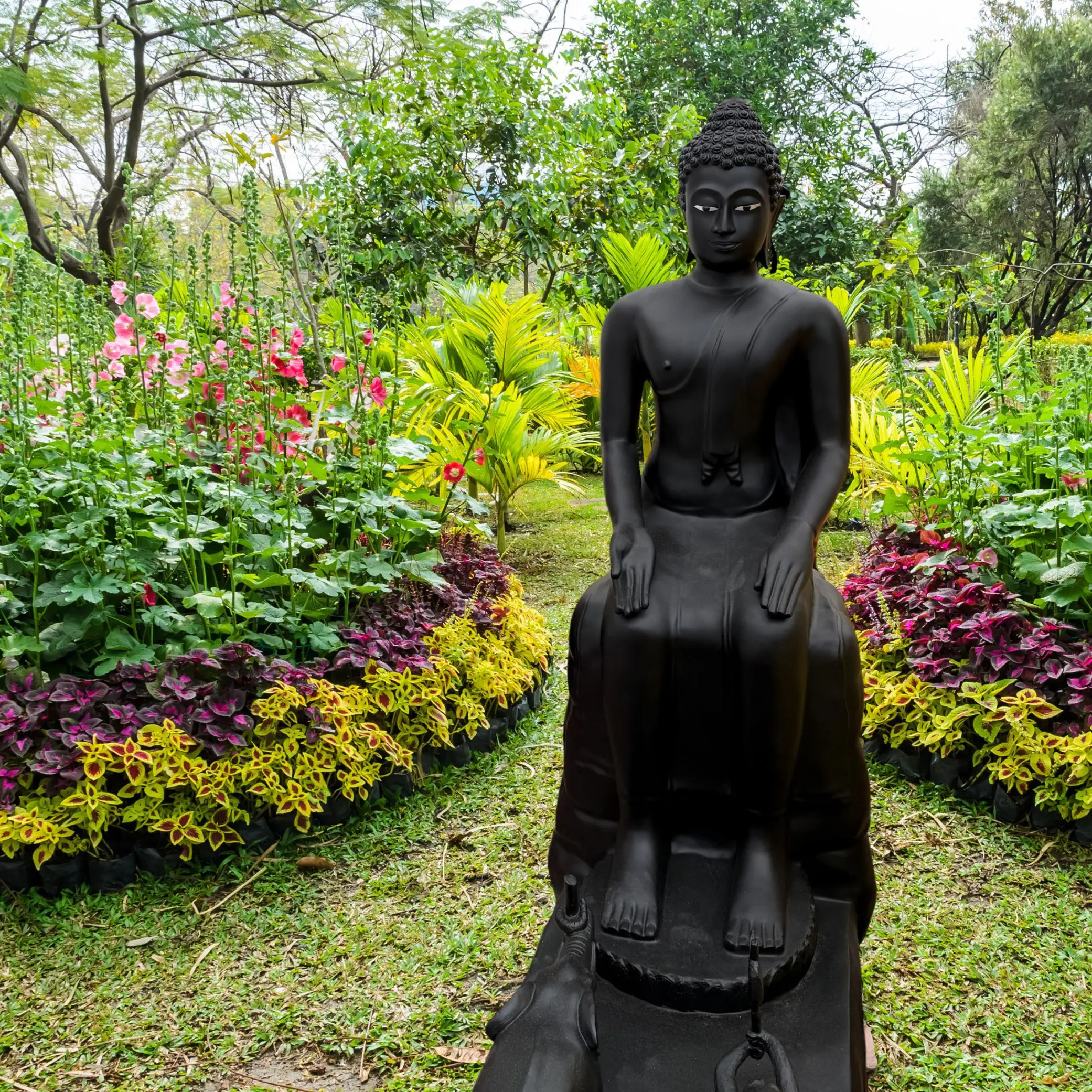
Buddha of Wednesday Night (Pang Pa Lelai)
Theravada tradition
In Thailand, there is a different Buddha posture allocated, with its own iconographical representation, for each day a person is born on. You can see all of these different postures of Buddha-Rupa Images within Thai Temples. For example, some temples have them all arranged alongside each other as a prayer shrine, with alms bowls in front of each of them, lined up in a row. This is for devotees to donate in front of their Birthday Buddha, with the amount given depending on how late in the month they were born. There is one Buddha for each Birthday, with the exception of those born on Wednesdays. This day has two Buddhas – one for the daytime and one for the nighttime, so you should know whether you were born in the daytime or evening to revere Wednesday’s Buddha.
Pang Pa Lelai
This Pang (image) is of the Buddha sitting on a rock under a tree and called “Pang Pa Lelai”. His hands are outstretched, receiving offerings from two animals. The Elephant is offering him water to drink, and the Monkey is offering him a beehive full of honey.
The history behind this image is thus. In the City of Kosambi, there were two Bhikkhus staying in the same temple – one of them whose name was Vinayadhara , who was very faithful to the Vinaya, and the other whose name was Dhammadhara, who was extremely dedicated to teaching the Dharma. Both of them had a great number of disciples. One day, Pra Dhammadhara used the bathing area and forgot to replace the water in the receptacle for bathing and left it nearly empty. When Pra Vinayadhara saw this he scolded Pra Dhammadhara for his negligence, as this went against the Vinaya. Pra Dhammadhara then apologised and made the necessary prostrations to make up for his negligence. After he had left the scene, Pra Vinayadhara began gossiping with his own disciples that Pra Dhammadhara had made a transgression and didn’t even regret it or show penance properly. When Pra Dhammadhara heard about this gossip, he became angry and went to Pra Vinayadhamma and asked him why he was spreading such lies. The two Bhikkhus began to argue heatedly, causing even their disciples to get involved with the argument. When the Buddha saw this, he went to try to calm the two Bhikkhus, teaching them that peacefulness and mutual support is the way, not to quarrel and disrespect each other and fight. Despite this, the fight between the two groups continued, and the local population found out about their behaviour and began loosing trust in the Dharma.
Totally disappointment with the monastic sangha of Kosambi, the Buddha entered in the forest known as Palilayaka (Palelai). Here, alone and without any hope of people coming to make any more offerings of alms and food, the Elephant Parilayaka and the Monkey decided to offer the Buddha alms. The creation of this Buddha Image was made as a warning to remember the need for common understanding and compassion within the sangha and towards all beings, as well as the importance of avoiding causing trouble or stirring arguments, which divide the sangha.
This statue is already completed!
Authentic, traditional Thai Buddha statues are almost impossible to obtain. Not many craftsmen specialise in their production, and even then, there are very tight export regulations on such holy objects in Thailand. We have only managed to obtain this valuable treasure through the joyful effort of one of Khentrul Rinpoche’s student from Thailand, Poovapat Theamjanya.
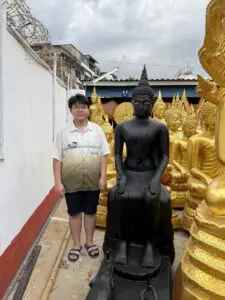
This statue was sourced by authentic creators in Thailand